
Why Some Beautiful Homes Still Feel Cheap
The subtle design mistakes that can undermine an otherwise expensive interior—and how to avoid them.
Have you ever walked into a home with beautiful furniture, expensive finishes, and carefully chosen colors, yet something about it still felt surprisingly ordinary?
And then, perhaps, you've entered a much simpler home that somehow felt elegant, sophisticated, and far more expensive than its actual budget would suggest.
The difference isn't always the price of the furniture, the brand of the kitchen cabinets, or the type of stone on the countertops. More often, it's the way all the elements work together.
Luxury is rarely about a single expensive purchase. It's about proportions, materials, lighting, shapes, and the details that most people don't consciously notice—but instinctively respond to.
As an interior designer, I believe that understanding these details is one of the most effective ways to elevate a home without necessarily spending more money.
Here are some of the most common reasons beautiful homes can still feel less luxurious than they should—and what you can do about them.
1. Expensive Materials, Poor Proportions
One of the biggest misconceptions about luxury interiors is that expensive materials and objects automatically create an expensive-looking result.
They don't.
A beautiful marble countertop can look underwhelming if it's paired with poorly proportioned cabinets. An expensive sofa can look awkward if it's too small for the room. Even custom cabinetry can lose its impact when the scale of the doors, drawers, or hardware feels wrong.
Proportion is one of the foundations of good design.
Consider a living room with high ceilings and large windows. If the furniture is too small, the room can feel empty and unfinished. Conversely, oversized furniture in a modest room can make the space feel crowded.
The same principle applies to kitchens and bathrooms. Cabinet heights, island dimensions, mirror sizes, lighting fixtures, and the spacing between elements all influence how the finished space feels.

How to improve it: Before investing in expensive finishes, pay attention to scale. Choose furniture and art appropriate for the room, make sure architectural features feel balanced, and consider the relationship between every major element.
Sometimes, correcting wall color, proportions and positions will make a greater difference than upgrading.

2. Too Many Competing Materials and Finishes
Luxury interiors often feel calm, cohesive, and intentional. One reason is that the materials complement one another rather than compete for attention.
A common mistake is selecting every finish independently: a dramatic countertop, patterned backsplash, contrasting cabinet colors, several metal finishes, textured flooring, and multiple decorative accents.
Individually, each choice might be beautiful. Together, they can create visual noise.
This doesn't mean that luxurious homes must be neutral or minimalist. Rich colors, dramatic veining, contrasting textures, and bold design statements can be stunning. The key is knowing which elements should lead and which should support the overall design.
A kitchen, for example, might feature a striking natural-stone island as its focal point. The surrounding cabinetry, backsplash, and hardware can then complement that feature rather than compete with it.
The result feels deliberate rather than overdecorated.
How to improve it: Select a clear design direction before choosing individual finishes. Limit the number of dominant materials, repeat certain tones throughout the space, and allow a few special elements to stand out.
Luxury isn't about using the most beautiful materials you can find. It's about making them look beautiful together.


In this kitchen tile makes the statement, while the calm countertops keep the design balanced. The result feels personal, refined, and effortlessly timeless

A calm, monochromatic palette creates a timeless foundation, allowing the natural warmth of wood and carefully chosen personal pieces to add character without overwhelming the space.
3. Lighting That Doesn't Do the Architecture Justice
Lighting is one of the most underestimated elements of interior design.
You can invest in beautiful cabinetry, natural stone, elegant flooring, and high-quality furniture, but harsh lighting can make all of it look flat and uninviting.
A single bright ceiling fixture often creates an uneven, overly functional atmosphere. It illuminates the room, but it doesn't necessarily make the room look good.
Well-designed interiors use layers of light to create depth, emphasize architectural features, and establish a comfortable atmosphere.

Think of the difference between a kitchen illuminated only by ceiling lights and one that combines recessed lighting, under-cabinet illumination, and carefully selected decorative fixtures.

The second space often feels more refined because the light has been designed to enhance the materials and shapes within it.
Color temperature matters, too. Very cool lighting can make warm wood and natural stone look less inviting, while excessively warm lighting can distort colors.

How to improve it: Combine ambient lighting with task lighting and accent lighting. Use dimmers where appropriate, illuminate work surfaces properly, and select light sources that flatter the materials in your home.
Good lighting doesn't just help you see a beautiful room. It helps you experience it.
4. Cheap-Looking Details That Undermine the Entire Room
Sometimes, the difference between an expensive-looking interior and an ordinary one comes down to details that seem insignificant until you notice them.
Poorly aligned cabinet doors. Uneven gaps. Visible filler strips that look like an afterthought. Inconsistent hardware. Sloppy caulking. Cheap-looking electrical plates. Poorly finished trim.
These details may occupy very little visual space, but they can influence the impression of the entire room.
Why? Because quality is often communicated through precision.
When cabinet doors align perfectly, transitions between materials are clean, and trim meets walls and flooring neatly, the space feels carefully executed. When these details are inconsistent, even expensive materials can look less impressive.
This is particularly important in kitchens and bathrooms, where the eye naturally notices the alignment of cabinets, tile joints, fixtures, and edges.

How to improve it: Pay attention to the finish work. Choose hardware that complements the cabinetry, maintain consistent alignments, and insist on clean transitions between materials.
When renovating, don't spend your entire budget on visible upgrades while neglecting installation quality.
Sometimes, the most luxurious detail is the one that looks effortless because it has been executed so well.
5. Furniture That Looks Like It Came Straight From a Showroom
There's nothing wrong with buying furniture from a popular retailer. Many retailers offer beautiful, well-designed pieces at reasonable prices.
The problem arises when an entire room looks as though it was purchased as one matching collection.
When the sofa, coffee table, side tables, lighting, and accessories all share the same style, finish, and visual weight, the result can feel predictable.
High-end interiors often have a more collected appearance. They combine different forms, materials, textures, and periods in a way that feels personal rather than formulaic.
A contemporary sofa might sit alongside a vintage wooden table. A modern room might feature an antique mirror or a sculptural ceramic lamp. A restrained palette might be enriched by a distinctive piece of art.
These combinations create depth and individuality.
The room feels as though it has evolved through thoughtful decisions rather than being assembled from a single catalog page.
How to improve it: Avoid purchasing every item to match. Introduce contrast through materials, shapes, and carefully chosen statement pieces. Mix contemporary elements with something that has character, history, or an unexpected silhouette.
The goal isn't to make the room look eclectic for the sake of it. It's to make it feel considered and individual.

6. Curves: The Difference Between Mass-Produced and Custom Design
One of the most interesting characteristics of luxury interiors is the use of curved and organically shaped elements.

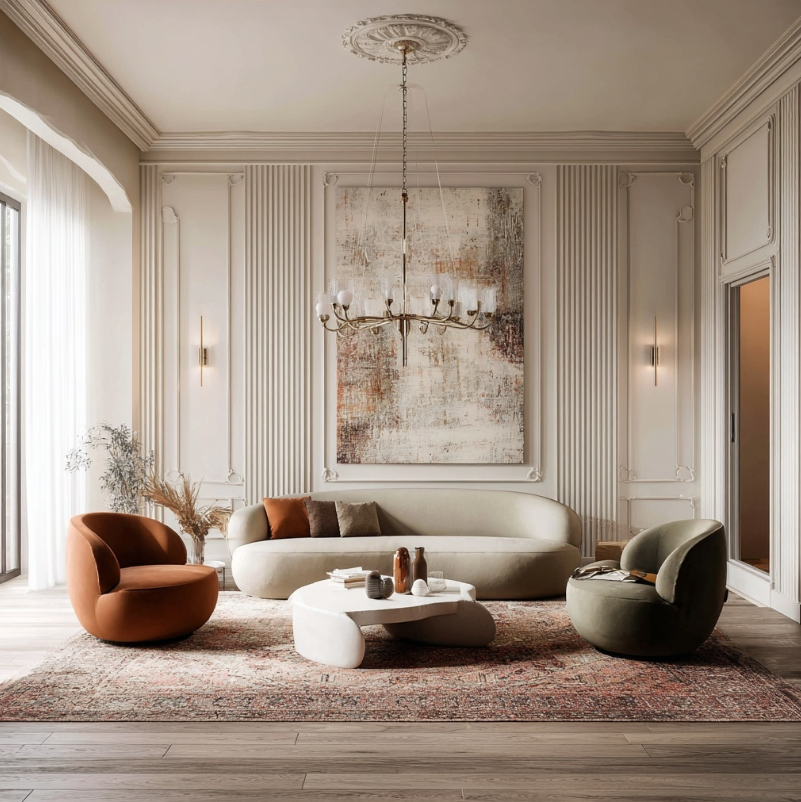
Look at the difference between a room filled exclusively with rectangular furniture and one that incorporates a sculptural coffee table, a softly curved sofa, an organically shaped mirror, or a rounded kitchen island.
The second room often feels more distinctive and sophisticated—even if the materials and overall budget are similar.
Why?
Because straight lines and square corners are familiar, practical, and easy to find in mass-produced furniture and standard construction. Curved forms, on the other hand, often suggest more thoughtful design, specialized fabrication, and individual craftsmanship.
Curves can make a space feel custom-designed, even when the objects themselves aren't custom-made.
A beautifully rounded stone table or an organically shaped piece of furniture can look more like a work of art than an ordinary functional object. It introduces a sense of individuality that standard rectangular forms sometimes lack.
The effect becomes particularly powerful when organic shapes are paired with refined materials such as natural stone, solid wood, plaster, or textured upholstery.
Consider a few examples:
A sculptural travertine coffee table instead of a standard rectangular table.

A rounded mirror instead of a conventional square or rectangular one.
A curved chair that softens the straight lines of a dining room.
A kitchen island with gently rounded corners or a more sculptural silhouette.
A curved plaster detail that introduces architectural interest without excessive decoration.
These elements create movement, soften the geometry of a room, and make the design feel less generic.
Of course, curves alone don't guarantee luxury. A poorly proportioned curved object can look just as ordinary as a poorly proportioned rectangular one. The shape, material, scale, and craftsmanship must work together.
And there's no need to replace every straight-edged object in your home. In fact, the contrast between clean architectural lines and a few organic forms is often what makes the design successful.
How to improve it: Start with one or two sculptural pieces that stand out against the existing architecture. Choose forms that feel intentional and complement the materials already in the room.

You don't necessarily need custom furniture or an expensive renovation. Sometimes, one beautifully shaped object can change the character of an entire space.
Luxury often lies in what feels unique rather than what costs the most.

7. Window Treatments That Look Like an Afterthought
Windows occupy a significant amount of visual space, yet their treatments are often chosen at the very end of a renovation.
The result can be beautiful architecture undermined by curtains that are too short, poorly positioned rods, or inexpensive-looking materials that don't complement the room.
Window treatments affect the perceived height, width, and overall proportions of a space.
Curtains hung too low can make ceilings feel shorter. Panels that are too narrow can make a large window look awkward. Heavy or overly decorative fabrics may compete with an otherwise refined interior.
By contrast, thoughtfully positioned curtains can make windows appear taller and walls feel more expansive.
How to improve it: Consider window treatments as part of the architectural design, not simply as decoration. Where appropriate, mount curtain rods higher and wider than the window, choose suitable fabric, and ensure the panels have the right length and fullness.
For a clean, contemporary look, simple fabrics and carefully executed details often work better than elaborate embellishments.
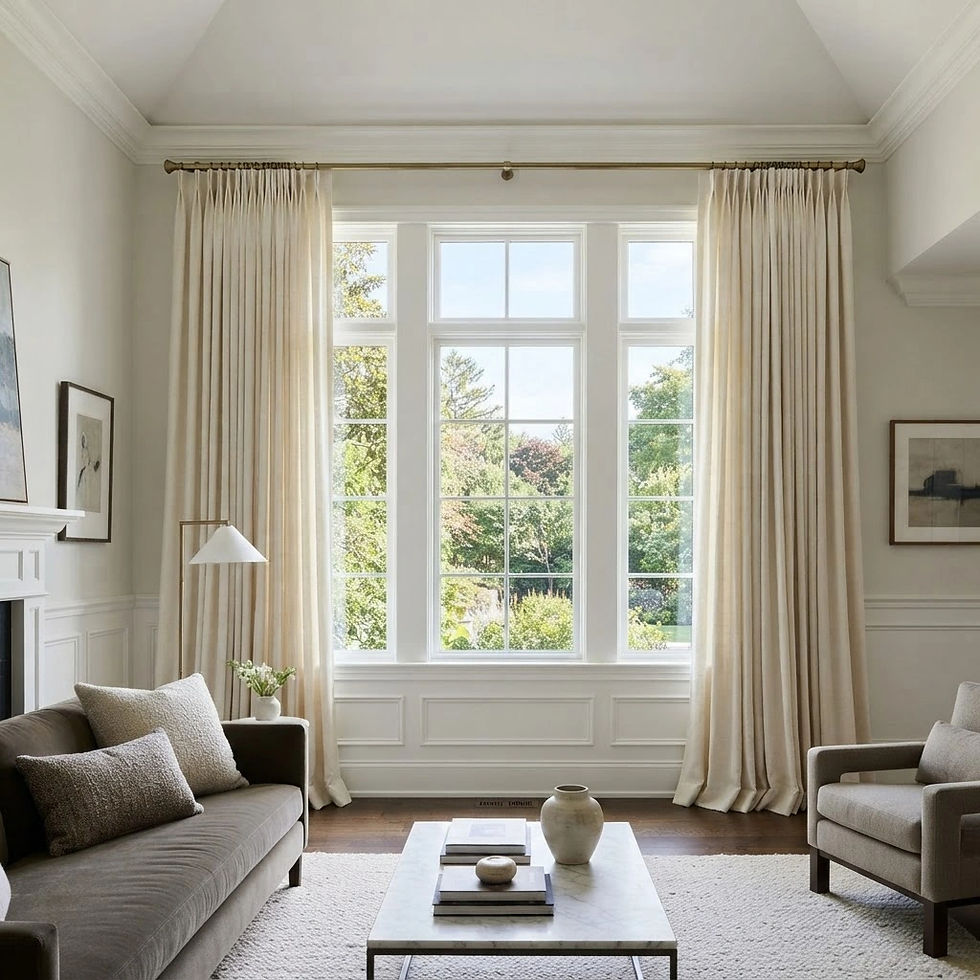
The objective is to make the window treatment feel integrated into the room rather than added at the last minute.
8. A Lack of Texture and Natural Materials
A room can have a beautiful color palette and still feel flat.
This often happens when too many surfaces have the same visual quality. Smooth painted walls, glossy cabinetry, polished stone, and synthetic fabrics can create a space that looks finished but lacks depth.
Luxury interiors frequently rely on contrast between textures.
Imagine a room combining warm wood, natural stone, linen upholstery, textured plaster, and a few refined metal accents. Even if the colors are relatively simple, the different surfaces create visual richness.
Natural materials are particularly effective because they have subtle variations that make them feel distinctive. Wood grain, stone veining, and the irregularities of handcrafted ceramics introduce character without requiring additional decoration.
That doesn't mean every surface needs to be natural or expensive. Modern engineered materials can also look beautiful when selected carefully.
What matters is the overall composition.
How to improve it: Introduce a few contrasting textures. Pair smooth surfaces with tactile fabrics, combine wood with stone, and use matte and polished finishes intentionally.
A restrained color palette can look remarkably luxurious when the materials themselves provide enough visual interest.

9. Too Much Decoration, Not Enough Restraint
It may seem logical that adding more beautiful objects will make a room look more expensive.
In practice, the opposite can happen.
Too many accessories, decorative trays, small sculptures, artificial plants, cushions, and tabletop arrangements can overwhelm a space. Instead of noticing the architecture or the quality of the materials, the eye moves constantly from one object to another.
Luxury often depends on knowing when to stop.
A carefully selected sculpture on a console can make a stronger impression than ten unrelated accessories. A beautiful dining table deserves enough empty space around it to be appreciated. An elegant kitchen may look better with a few thoughtfully chosen objects than with every countertop covered.
This doesn't mean that luxurious homes must feel empty or sterile. Personal collections, books, artwork, and meaningful objects can add tremendous character.
The distinction is between intentional display and visual clutter.
How to improve it: Edit your accessories. Group objects thoughtfully, vary their heights and proportions, and leave some surfaces relatively clear.
Give the eye somewhere to rest.
When a room has breathing space, the pieces that remain often look more important—and more expensive.

10. Ignoring the Details That Connect One Room to Another
A beautiful room can lose some of its impact when the rest of the house feels disconnected.
For example, a sophisticated kitchen might open into a living room with completely different flooring tones, competing metal finishes, unrelated lighting styles, and an inconsistent color palette.
Individual rooms can look attractive on their own, but the overall home may lack cohesion.
This is particularly noticeable in open-plan spaces, where several functional areas are visible simultaneously.
A luxurious home doesn't need to look identical from room to room. Repetition can become monotonous, too. Instead, the spaces should feel related through a consistent design language.
Perhaps the same wood tone appears in several rooms. Warm metal finishes are repeated selectively. Architectural trim, ceiling design, same flooring materials, lighting styles, or colors establish a subtle connection.
These relationships help the home feel designed as a whole.

How to improve it: Establish a few recurring elements throughout the house. They might include a consistent undertone in the finishes, complementary materials, a restrained palette, or a recognizable approach to lighting and detailing.
The goal is not uniformity. It's harmony.
11. Choosing Trends Instead of Designing for Longevity
Trends can be exciting, and they can introduce fresh ideas into a home. But when too many fashionable elements are combined without considering the architecture, the result can quickly feel dated.
An interior may look impressive on social media but feel less sophisticated in person because it relies heavily on recognizable trends rather than thoughtful design.
This is especially risky with expensive, difficult-to-replace elements such as flooring, cabinetry, countertops, and bathroom tile.
A luxurious interior doesn't necessarily have to be traditional or timeless in the conventional sense. Contemporary design can be bold, innovative, and highly individual.
The important distinction is whether the design has a clear point of view.
How to improve it: Use permanent finishes that work well with the home's architecture, then introduce trends through elements that are easier to change. Pay attention to proportions, material quality, and the way the design will function over time.
Rather than asking whether a particular finish is fashionable today, ask whether it contributes to the overall design.
A beautiful home should feel relevant because it is well designed, not simply because it follows the latest trend.

The Real Secret to an Expensive-Looking Home
A luxurious interior isn't necessarily the one with the most expensive furniture, the largest kitchen island, or the most dramatic stone.
It's the one where the details work together.
Proportions are balanced. Materials complement one another. Lighting enhances the architecture. Curves introduce individuality. Finishes are executed carefully. Furniture feels collected rather than copied, and decoration is edited rather than excessive.
These decisions may not always be obvious when you first enter a room, but together they shape the way the space feels.
And that is what makes them so powerful.
If you're renovating, you don't necessarily need to increase your budget to achieve a more sophisticated result. You may need to reconsider how that budget is allocated.
Instead of spending more on a fashionable finish, invest in better proportions. Instead of filling every corner, introduce one distinctive sculptural piece. Instead of adding more decoration, improve the lighting or refine the details.
Sometimes, the difference between an ordinary home and one that feels genuinely luxurious isn't what you add.
It's the thought behind every decision—and the restraint to know what not to add.
Ready to Make Your Home Feel More Refined?
At BLIS Home Design, we help homeowners create thoughtful, cohesive interiors that feel personal, timeless, and beautifully considered.


Comments